National History Museum Way finding Project (Ongoing)

National History Museum Way finding Project

Subtitle: An Adaptive Spatial Interface for Intuitive Museum Navigation

01. The Challenge

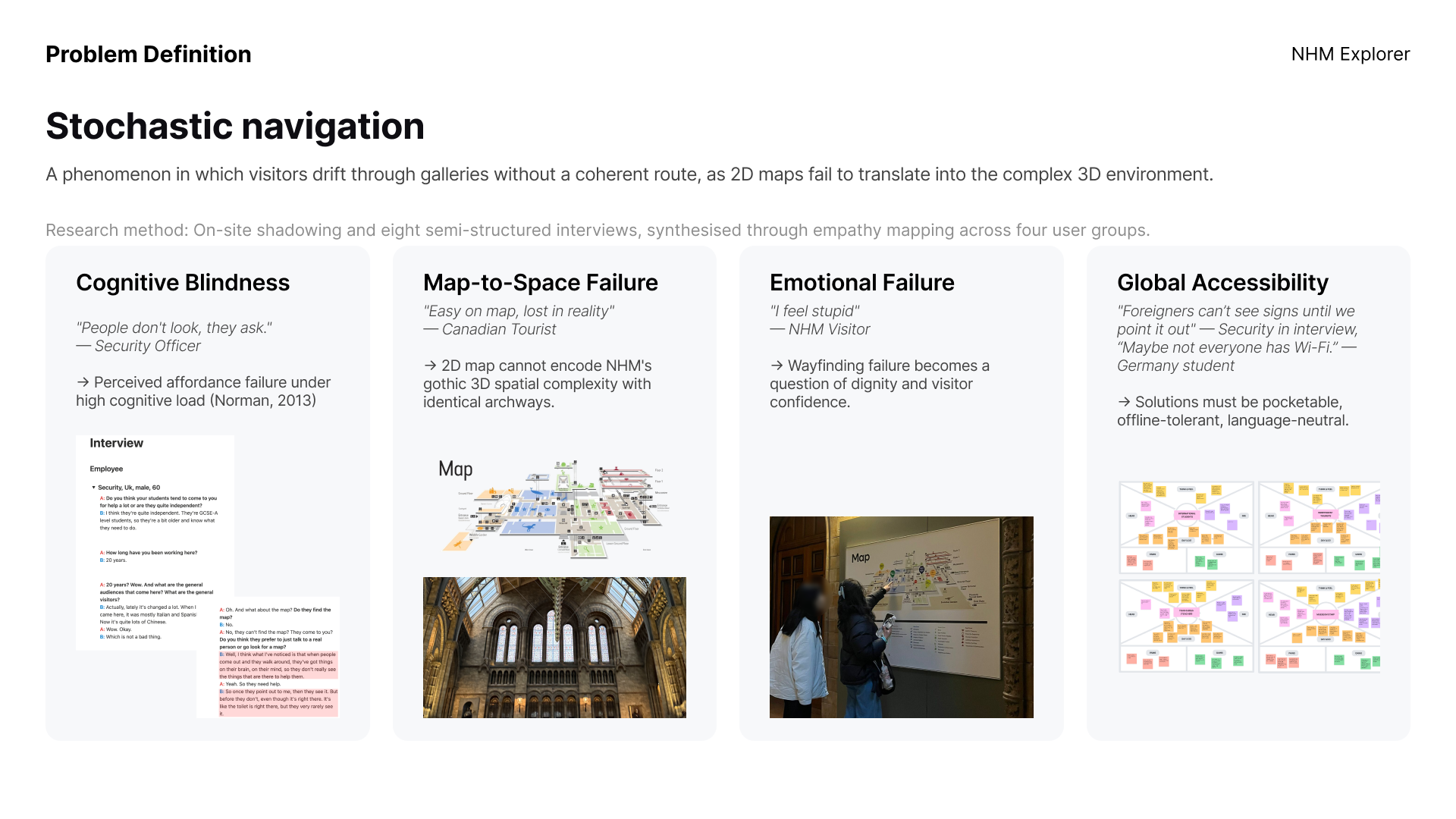
"Why do visitors still get lost in museums despite having maps?"In complex Victorian structures like the Natural History Museum, visitors experience 'Cognitive Blindness.' The grand, repetitive architecture makes galleries look identical, and 2D maps fail to translate into 3D environments. Research shows that visitors bypass signage to seek 'human reassurance' from staff, leading to operational bottlenecks.

02. Research Synthesis

  • The Paradox: Visitors prefer the presence of a 'real person' over paper maps for psychological security.
  • Architectural Fatigue: The Victorian layout causes disorientation; visitors struggle to identify their location without external cues.
  • The Connectivity Barrier: International tourists often face unstable Wi-Fi or data roaming issues, rendering traditional cloud-based apps ineffective.

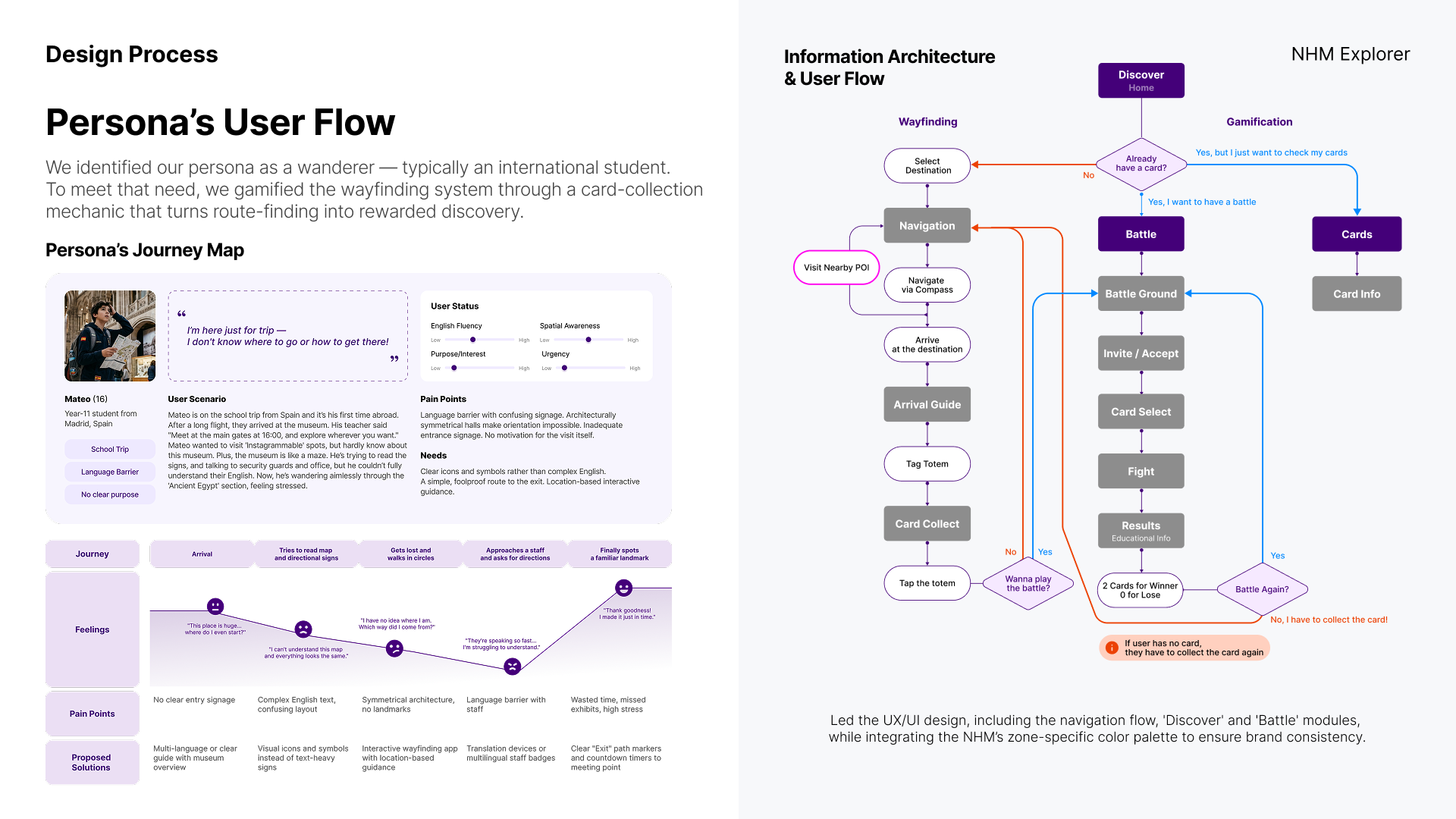
03. The Solution: A Phygital Navigation System

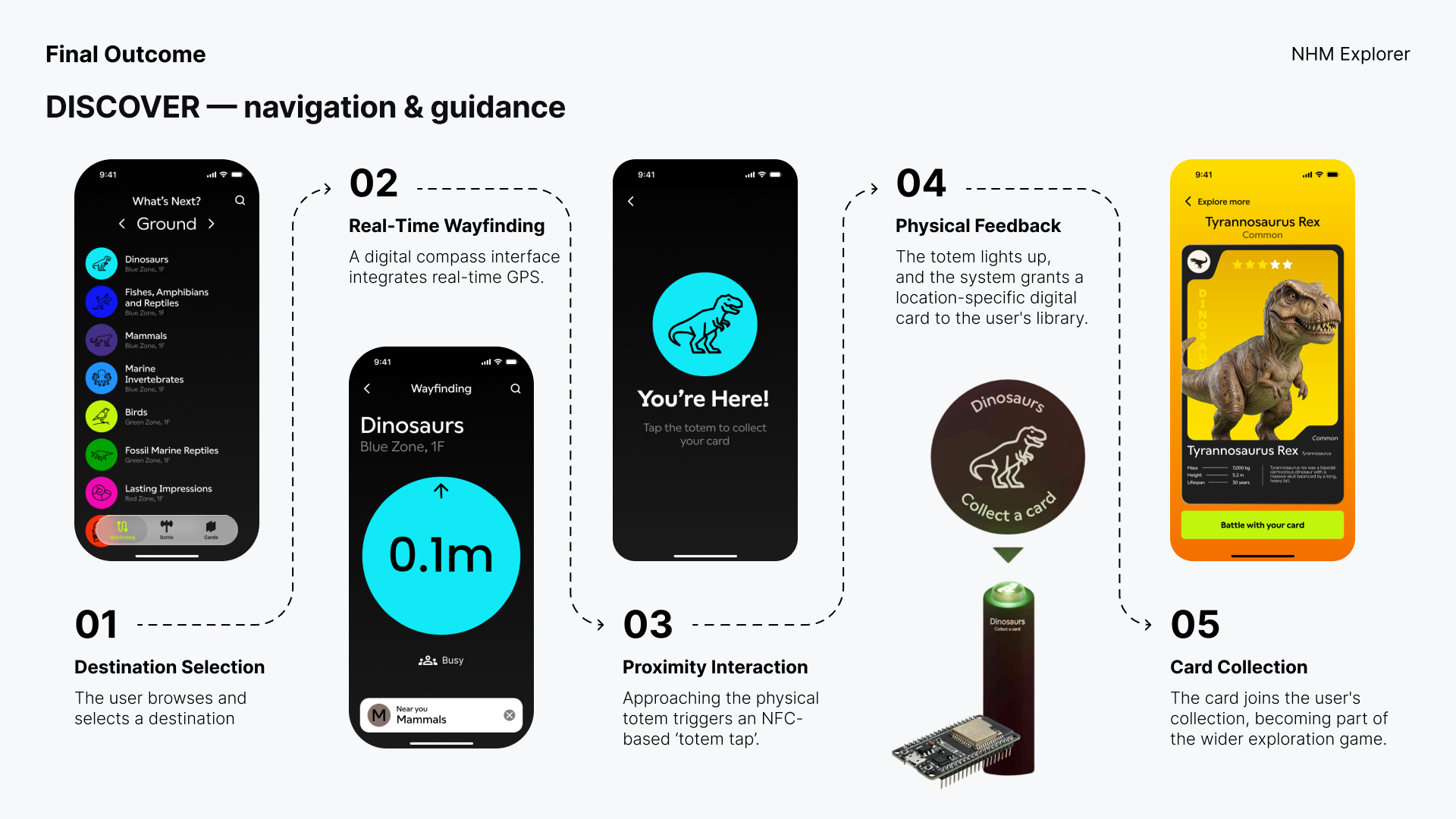
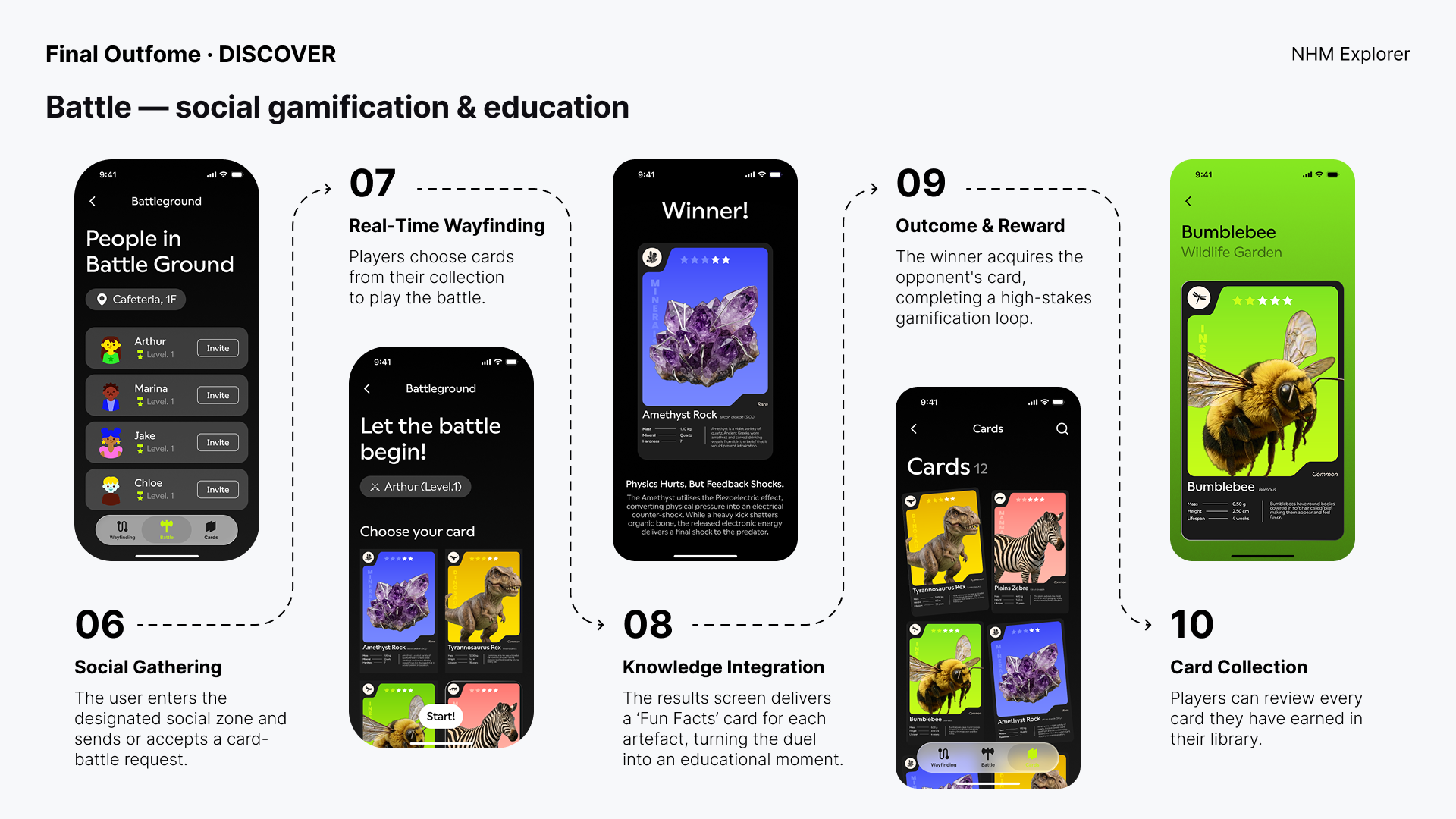
The Living Spine is a hybrid wayfinding system that synchronises a mobile web-app with responsive physical hardware.

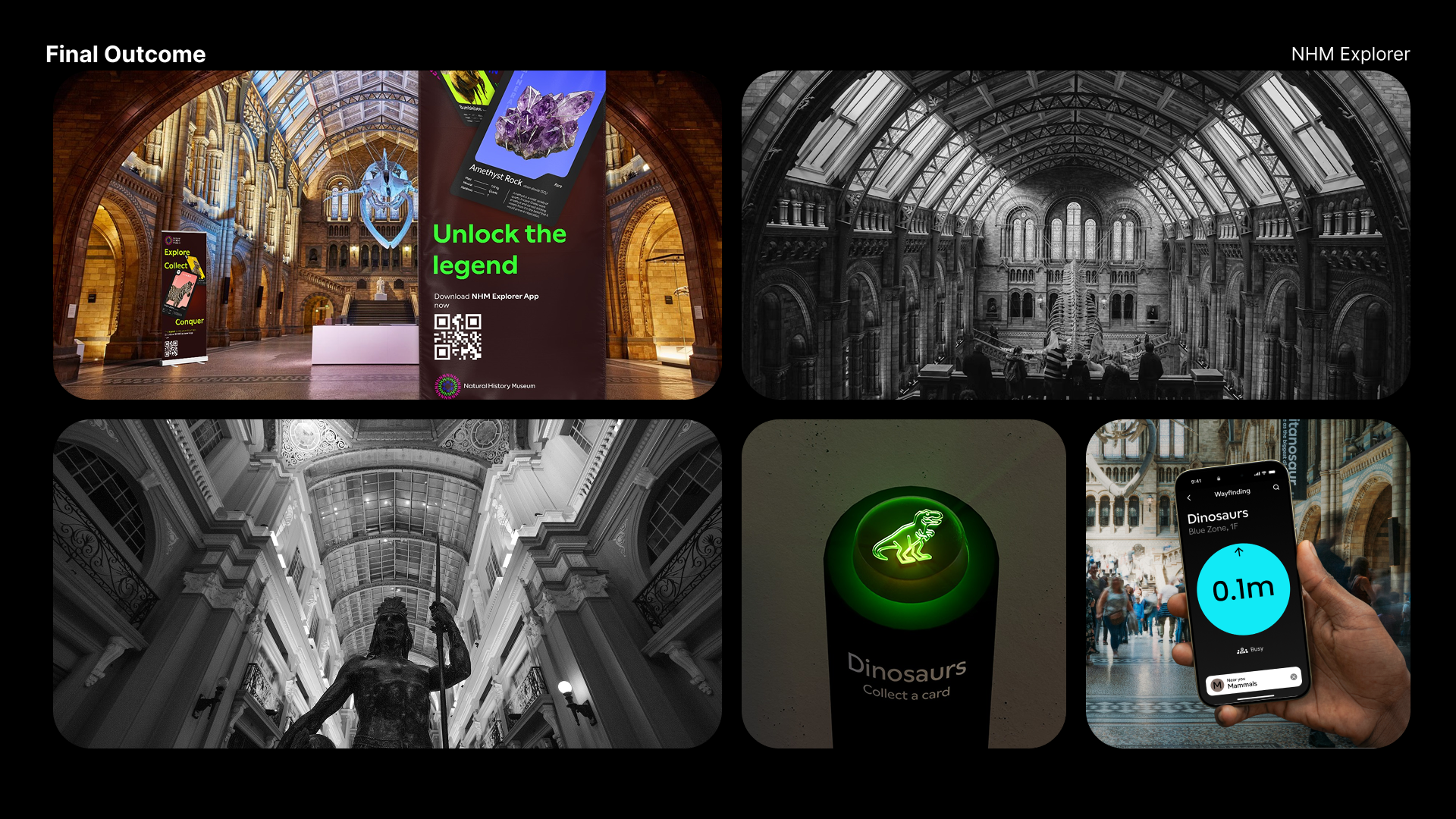
  • Smart Corner Totems (The Human Proxy): Proactive 3D-printed pillars that 'wake up' via proximity sensors to initiate guidance.
  • Ambient Wall Zoning: Peripheral lighting that washes gallery walls in zone-specific colours (Red/Blue/Green), allowing for subconscious orientation.
  • Interactive Floor Trails: Pulsing LED paths embedded in the floor that provide a continuous visual thread toward the chosen destination.

04. Technical Excellence (How It Works)

  • Edge Computing & Local Mesh: To solve the 'No Data' issue, each ESP32 microcontroller acts as a Standalone Access Point (SoftAP). Visitors connect locally via QR codes, ensuring 100% uptime without museum Wi-Fi.
  • Zero-Latency Interaction: Utilising WebSockets, the system provides instantaneous physical feedback—the moment a user selects a gallery on their phone, the physical space (LEDs) responds.
  • Proximity Awareness: Integrated Ultrasonic sensors detect visitor arrival, breaking cognitive blindness by shifting the totem from a 'static object' to an 'active guide.'

05. Design & Fabrication

  • 3D Printing & Materiality: The totems are fabricated using Translucent PETG, diffusing LED 'hotspots' into a soft, atmospheric 'Aura' that respects the historic museum aesthetic.
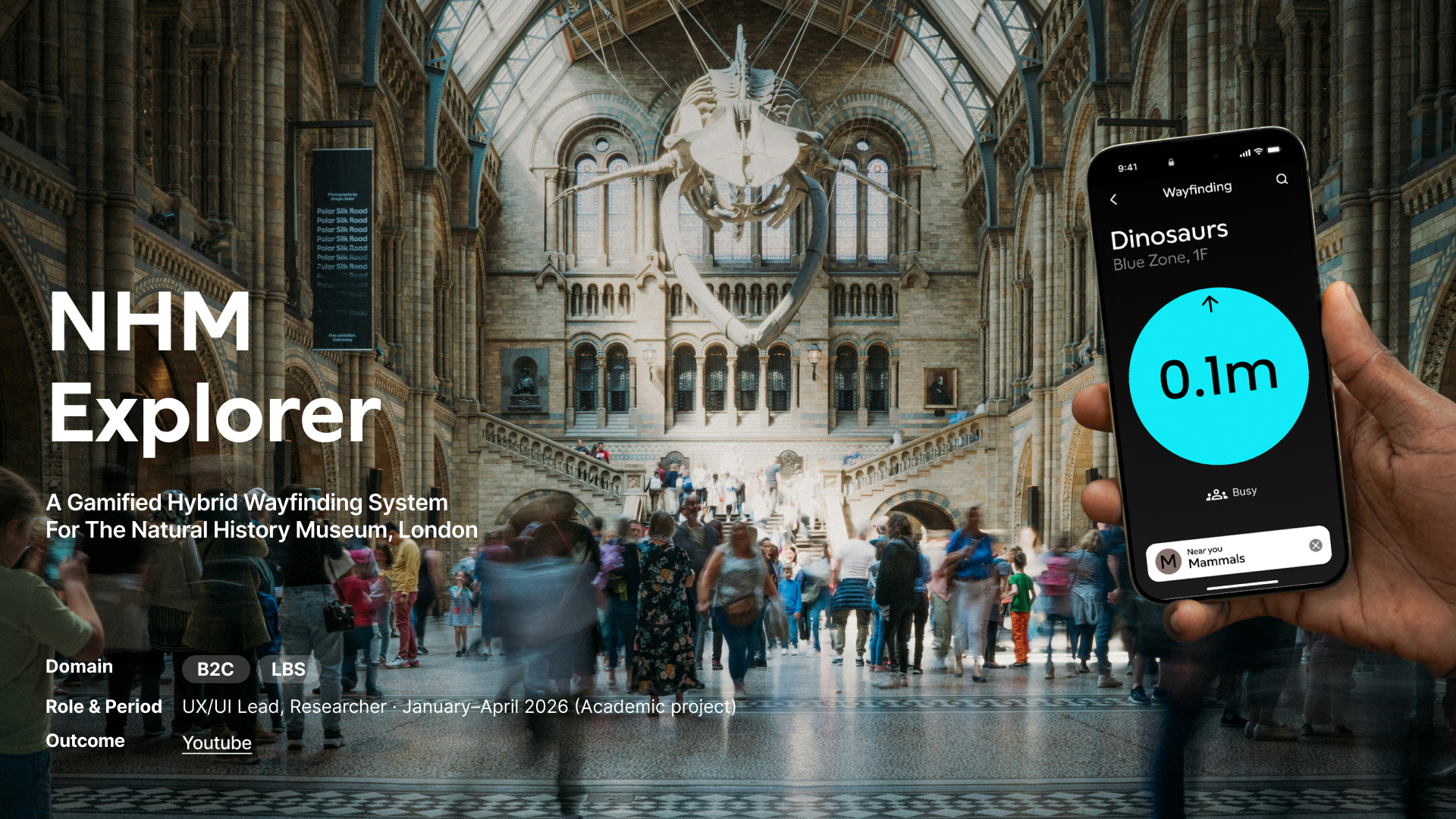
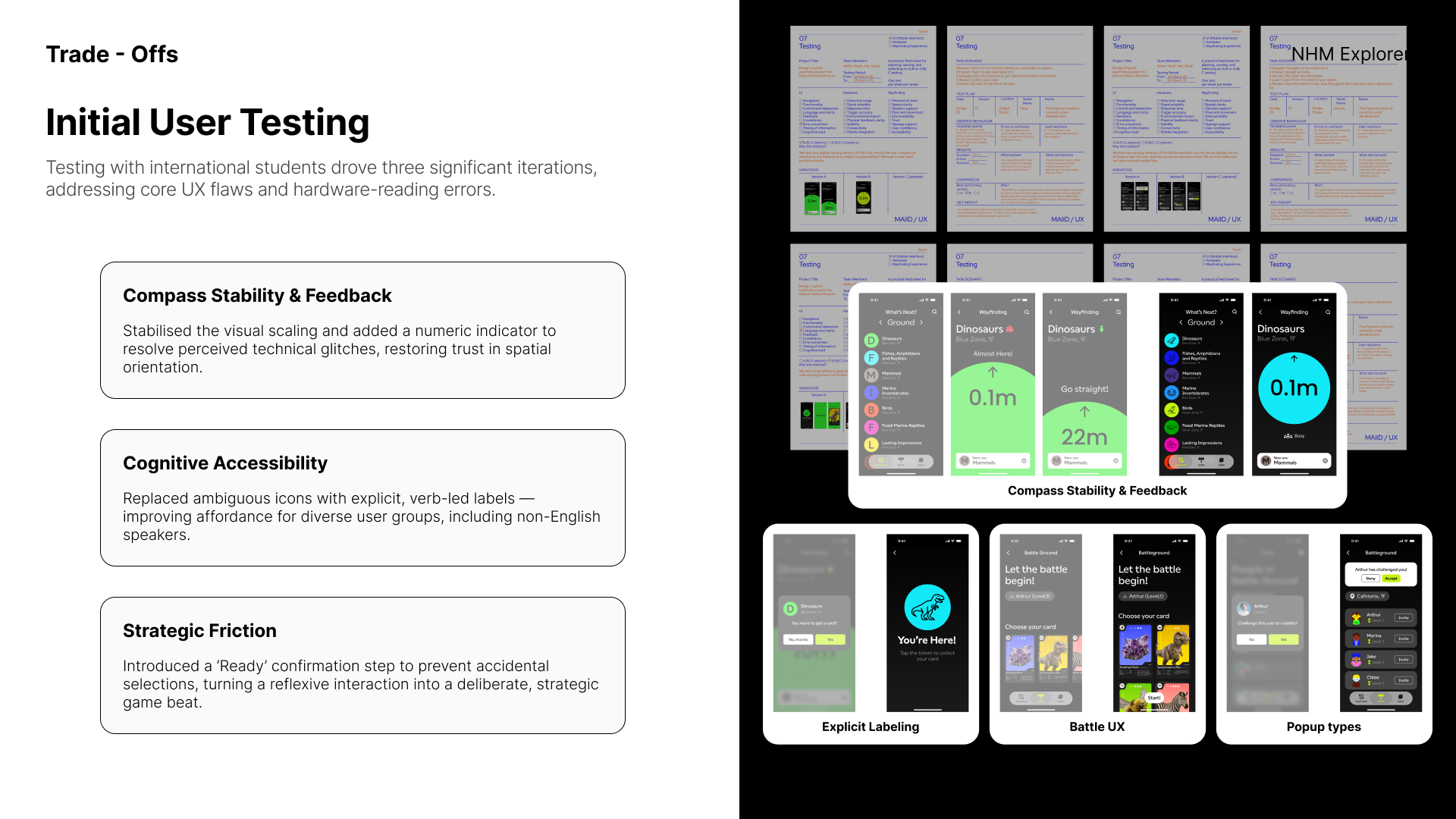
  • Minimalist UI: The interface strips away complex maps in favour of a Directional Compass, focusing purely on colour-coded cues and haptic feedback.

06. Strategic Impact

  • Operational Efficiency: Automates repetitive directional queries, allowing security staff to focus on safety and high-value interactions.
  • Crowd Flow Management: Uses real-time data to redirect visitors away from 'bottlenecks' (e.g., the Dinosaur gallery) to under-utilised spaces.
  • Inclusive Design: Transcends language barriers by using the universal language of light and colour to guide a global audience.

No items found.